
With increasing regularity the British high street hit the headlines over the past few months and years with store closures and retailers going bust. According to the British Retail Consortium, employment on the high street fell for 4 straight years, with some 57‘000 jobs having been lost in 2019. And the new year didn’t get off to a good start either, with a further 9‘949 jobs having been lost in just the first 3 weeks of 2020, while Tesco just announced that 1’800 in-store bakery jobs are going to go, starting from May.
And the bad news doesn’t stop there: The Office of National Statistics forecasts that 65% of cashiers‘ and checkout operators‘ jobs as well as 60% of Stock control roles will become redundant in the future.
Our shopping habits have drastically changed over time: with increasingly busy work- and social lives, we have – or seem to have – ever less time at our disposal for chores such as grocery shopping. And since it is so convenient, we buy more and more things online: it started with books, but my wife now orders clothes and makeup online. And the success of firms like Ocado clearly demonstrates that more people are even buying their groceries on the internet.
I must admit, I am not yet buying clothes and groceries online, and actually I doubt I ever will, but for a very long time I have ordered books, CD’s and software on the internet. Sometimes even after having seen and checked out an item in the shop, only to find it subsequently cheaper online.
It’s not fair, I agree, high street shops with rents, business rates etc to pay have inevitably higher overheads than an online retailer who delivers out of a possibly fully automated warehouses or pays its pickers abysmal hourly rates (Amazon take note, I am not mentioning the working conditions and picking targets you set for your staff). But since many struggle to make ends meet and we can’t avoid cost increases in season tickets, utilities and rents (buying a home has become nigh to impossible in large parts of the U.K. for first time buyers), we try to save money wherever we can.
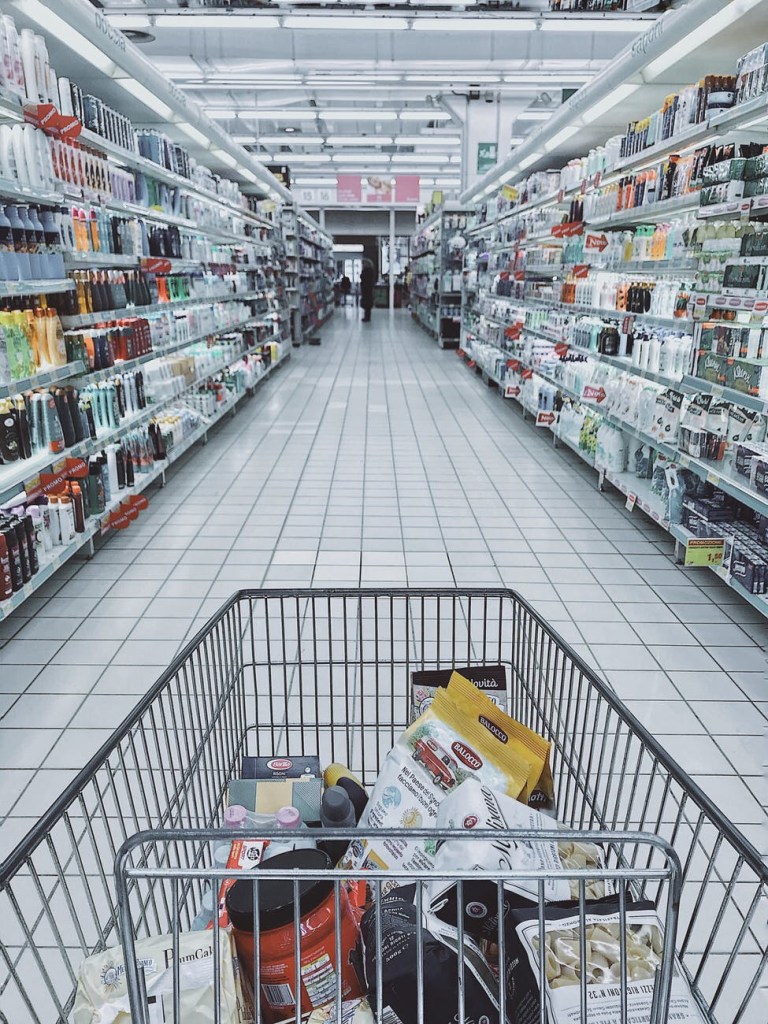
And quite honestly, it’s not all our fault: As far as groceries are concerned, the supermarkets price wars ‘ purpose is to woo the public, successfully as it seems, when we look at the market share Aldi and Lidl have captured in recent years. Moreover, staff in shops are often not very helpful or even ill informed about the product I want to buy, which leaves me and probably many others to seek advice on the internet, from where it is then only one small step to place the order online as well.
So bricks and mortar stores of this world ensure you provide helpful and well informed staff, and products which truly offer value for money. As far as price wars are concerned, those old enough to remember the price wars among the US airlines in the late 1970s and early 1980s can tell you a story of where this leads to (anyone remember Eastern Airlines?).
And don‘t try to entice us with fake promotions and ‚offers‘ which aren’t really good deals, for those of us who check prices this destroys trust and makes us only more disloyal. And the importance of loyalty, or customer retention, cannot be emphasised enough in this fast moving world.
 The grumpy older man