
Many of us will at one point or another in our lives have been bullied, be it at school, at work or maybe even at home. So how to best deal with a bully?
First, stay calm and don’t reward the behaviour. Bullies often want a reaction, be that fear, anger or embarrassment. Don’t give him that satisfaction. Even pretending not to care can reduce his interest over time.
Second, be assertive (not aggressive!). Clearly communicate your boundaries – then disengage. Assertiveness shows strength without escalating conflict.
Third, don’t face it alone. Bullies have more power when you’re isolated, so ensure a trusted ally is aware of what’s going on and publicly has your back.
Fourth, know when to escalate! Some situations may require stronger actions. Plan ahead and be prepared and ready to escalate if necessary.
And finally it is important to remember that you are not weak for being affected, and you are not obligated to “tough it out.” The goal isn’t to change the bully—it’s to protect yourself and reclaim your power.
Almost one year since the start of US President Trump’s second term one thing is clear: The United States have evolved from a former partner and ally to a bully of notably Europe and Asia, but, since the capture of the Venezuelan head of state, Nicolas Maduro and his wife from their home in the middle of the night by U.S. special forces also of Latin America.
Fair enough, Europe and Asia in many ways have relied too much in too many ways for too long on the USA. The changes in policy introduced by the current administration however are not only a threat but also the actions and the posturing of a bully. President Trump’s interest in Venezuela is clearly limited to its vast oil reserves. He has taken a shine to Greenland on the basis of its natural resources and strategic importance to keep namely Russia and China out of the western hemisphere. And Canada? Well, to quote the President himself: “Frankly, Canada should be the 51st state, they really should. Because Canada relies entirely on the United States, we don’t rely on Canada,” he said when commenting on the breakdown in trade negotiations last year.
But it’s not only Donald Trump who is bullying: Vladimir Putin has a lot of experience as well, not least by invading neighbouring countries and then pretending it’s their fault. Or take Xi Jinping, the President of China, who too redraws maps of territorial waters around his country and bullies neighbours such as the Philippines and Vietnam.
The new world order seems to revolve around three superpowers, the United States, Russia and China who seem to have their mind set on making and enforcing the rules in their respective spheres of influence by any means.
We’ve all met bullies. The playground variety, the office tyrant, maybe even the family despot. But lately, the world stage looks suspiciously like a schoolyard—only the bullies have nuclear arsenals and GDPs the size of continents. The United States, Russia, and China have taken the art of intimidation global, and the rest of us are left wondering: how do you deal with a bully when he owns half the planet?
Let’s start with the United States. Once the friendly big brother of the Western alliance, now the guy who steals your lunch and tells you it’s for your own good. Almost a year into Trump’s second term, America has perfected the swagger. From snatching Venezuela’s head of state in a midnight raid to eyeing Greenland like it’s a discounted property on Monopoly, the message is clear: resources first, diplomacy later—if at all. Canada, bless its polite heart, even got told it should be the 51st state. Because nothing says “partnership” like annexation jokes during trade talks.
Then there’s Russia, the seasoned professional. Putin doesn’t just bully; he gaslights. Invade a neighbor, then claim it was self-defense. Redraw borders, then lecture on sovereignty. It’s like watching someone flip the chessboard and declare victory. And the world, predictably, mumbles disapproval while buying cheap gas.
China, of course, plays its own game. Xi Jinping redraws maritime maps as if cartography were a personal hobby. The South China Sea? Practically a backyard pool now. Vietnam and the Philippines protest, but Beijing shrugs—because when you’re the factory of the world, who’s going to stop you? Certainly not the countries whose economies depend on your exports.
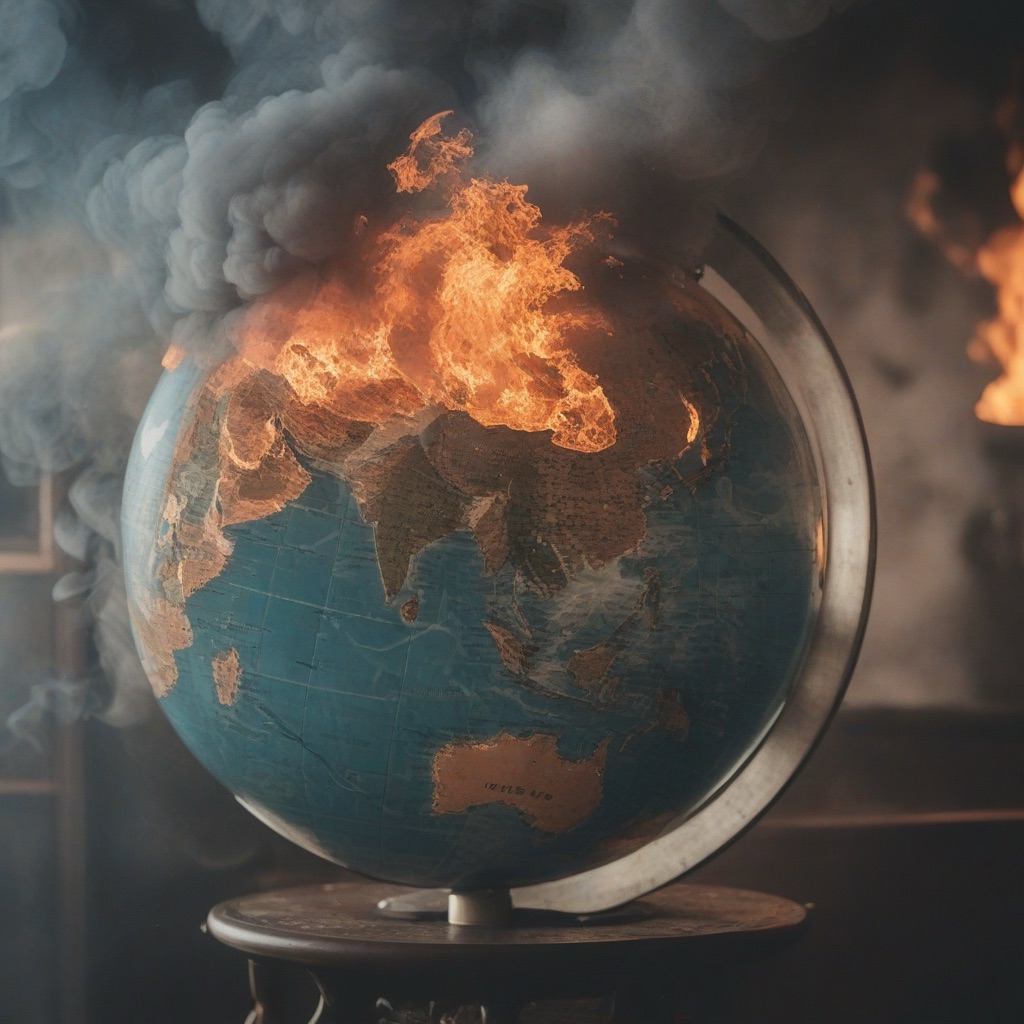
So here we are: three superpowers, three bullies, one shrinking playground. Each carving out spheres of influence, each convinced the rules don’t apply to them. The looming threats? Escalation—military, economic, and technological. Trade wars that morph into real wars. Cyberattacks that cripple infrastructure. And let’s not forget the climate crisis, which these power games conveniently ignore while drilling for more oil.
The ultimate goal isn’t to reform the bully. Trump, Putin, Xi—they’re not signing up for empathy workshops. The goal is to protect ourselves and reclaim agency in a world where power increasingly trumps (pun intended!) principle. President Trump has, for the moment at least, rescinded his threat of additional tariffs on eight European nations for stationing a small number of military personnel on Greenland. On the other hand, he threatens Canada with 100% tariffs if they sign a trade deal with China.
Nobody can win in these kind of standoffs, but at least this will hopefully encourage America‘s industry to lobby their president against such short sighted measures.
And there is one more aspect: An annexation of Greenland by the United States and independent nations such as Venezuela in essence being run out of Washington would most definitely play into the hands of Vladimir Putin and Xi Jinping, as this would legitimise the Russian invasion of Ukraine and, in advance, a potential attack by China of Taiwan.
If the playground analogy holds, the only thing worse than one bully is three of them—and right now, they’re running the game.
 The grumpy older man