
After the events of January 6 in Washington and President Trump‘s half-hearted disavowal of the violence it was only a question of time until Twitter, Facebook and all the other social media sites would take action. And rightly so, although I will miss Ex-President Trump‘s tweets, not for their insightful nature but for their entertainment value.
The right to freedom of expression or freedom of speech, known to our American friends as the First Amendment, is a fundamental entitlement. To quote from Wikipedia: Article 19 of the Universal Declaration of Human Rights, adopted in 1948, states that: Everyone has the right to freedom of opinion and expression; this right includes freedom to hold opinions without interference and to seek, receive and impart information and ideas through any media and regardless of frontiers.
Of course this includes opinions as ludicrous as injecting people with bleach or shining bright lights inside their bodies and many more outrageous expressions of opinion. This also means that all the conspiration theorists of this world are allowed to express their views publicly, such as that the new 5G wireless broadband standard may have caused or spread the coronavirus, or that the 9/11 attacks in September 2001 were an ‘inside job’ by the American government.
While many people may understandably reject some of these views, they are and should be covered by the right of expression, assuming that we – or most of us anyway – will be intelligent enough to make up our own minds whether these theories hold up to close scrutiny. After Donald Trump incited his followers in early January to march on the Capitol, resulting in the shocking footage which was live broadcast by television stations around the world, social media titans such as Twitter and Facebook closed Trump’s account and banned him from their services.
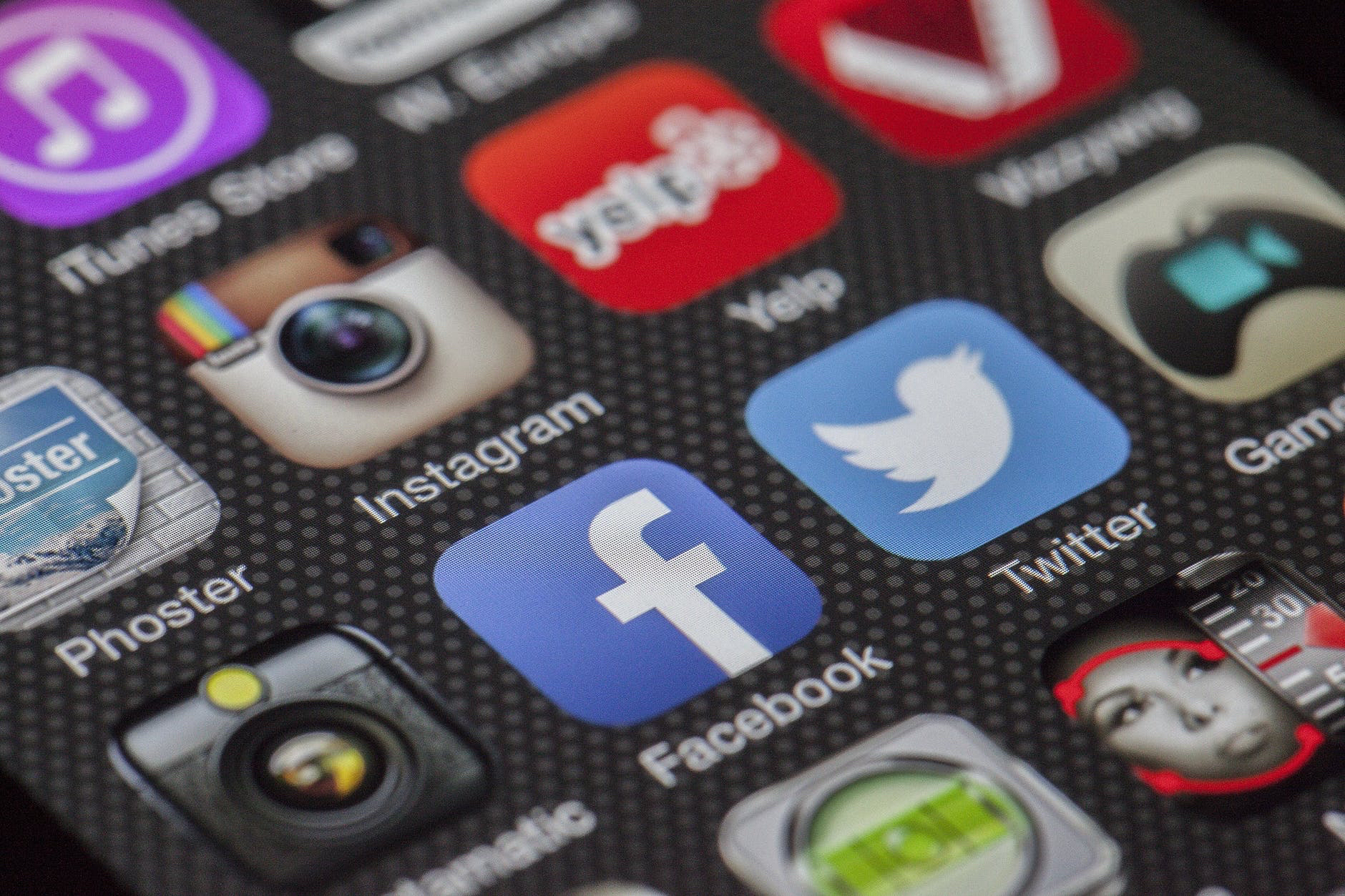
I have a problem with this reaction too! It is one thing, and by no means acceptable, if populist governments or dictatorships (dictatorship is one of the foundations of modern populism, but populism is not dictatorship) censor their citizens’ opinion. But it is something entirely different if privately owned businesses, particularly of the size of Twitter and Facebook, take matters into their own hands and decide whose voices should be heard and which opinions are worthy to be promulgated. Accepting such measures leads us onto a very slippery slope.
The term ‘thoughtcrime’ springs to mind, a word coined by George Orwell in his 1949 dystopian novel Nineteen Eighty-Four. It describes a person’s unorthodox thoughts, such as unspoken beliefs and doubts that contradict the prevailing tenets of society. In Orwell’s oeuvre, the Party can never execute absolute control until it gains control of the citizens’ minds. In a totalitarian regime this happens more or less in the open and not at all subtly. If private companies or other non-government groups are given such powers, the changes will be discreet and incremental, and many people may not even realise that their most fundamental rights are gradually being curtailed.
This is not worthy of a democracy, and it is the duty of our parliamentarians to ensure that no entity whatsoever and what ever its background or motivation has the means or authority to define constitutional rights such as the freedom of speech. Social media platforms, on the other hand, need to remove messages which clearly are in breach of current law and put a mechanism in place that allows its audience to flag potentially problematic posts. Facebook’s Like-button may be a nice feature, a Dislike-button might be more useful to flag an offending item to moderators.
Social media sites have a role to play in moderating posts, for example by appending them with comments that they may be factually inaccurate, or, if necessary, deleting a message if it invites actions which are against the law. But their role never should be banning people who express views which are not mainstream. Social media platforms won’t always get it right, but then that is democracy. The day we accept that other people decide for us what information we receive and what we should believe, totalitarianism will have triumphed. This would be a very sad day indeed.
 The grumpy older man
A thoughtful and articulate post. Whilst total freedom of speech is an ideal, it could never be an absolute right. Although most intelligent people can make their own minds up about the veracity of media, there have to be some limits surely. Should we allow people to openly promote racial violence for instance, or sex with children? Unfortunately we live in a world full of extremists and there has to be some form of censorship to protect the vulnerable and the minorities in society.
The tricky part is to get the right balance between protection and freedom of speech.
LikeLiked by 1 person
Excellent points you make, Sir, and I agree with you, it’s all a question of balance.
LikeLiked by 1 person
Thanks. I enjoyed the post. A well balanced article🙂
LikeLiked by 1 person
Well done, well said. Let us go with the “dislike” button. Was it Apple’s CEO who said such as facepages needed to be regulated? Regulation flies in the face of 1st Am but when an individual or worse, a corporation abuses a right, they no longer deserve the right. Therein lies the difficulty – who decides?
LikeLiked by 1 person